




Across Africa’s landscape, few predators are as unique, intelligent, and misunderstood as the African wild dog. Often overshadowed by lions and leopards, these remarkable animals are among the continent’s most effective hunters and most endangered carnivores. Known for their strong family bonds, incredible teamwork, and relentless endurance, African wild dogs represent one of Africa’s oldest and most specialized predators.
Today African wild dogs survive in only a fraction of their historic range; they continue to play an important role in maintaining balance within Africa’s remaining wild landscapes.
One of Africa’s Oldest Predators
The African wild dog, scientifically known as Lycaon pictus, comes from an ancient lineage that split from wolves, jackals, and other wild dog species around 1 to 2 million years ago. Over time, they evolved into one of Africa’s most unique and specialised predators, perfectly adapted to life across the continent’s open landscapes. Fossil evidence suggests that ancient relatives of African wild dogs once occurred beyond Africa, including parts of Europe and Asia, before the species eventually became restricted to the African continent.
Over thousands of years, African wild dogs developed several characteristics that set them apart from other canids. They have only four toes per foot instead of the usual five, large rounded ears that help with both communication and body cooling, and lean bodies built for stamina and endurance rather than raw strength. Perhaps most impressive of all is their remarkable ability to work together as a pack.
Their scientific name roughly translates to “painted wolf”, a fitting description for an animal known for its striking coat patterns. Each African wild dog carries its own mix of black, brown, white, and golden markings, meaning no two individuals look the same.
Historically, African wild dogs roamed across much of sub-Saharan Africa, moving through vast grasslands, savannahs, woodlands, and semi-arid regions. But as human populations expanded, their world began to shrink. Habitat loss, fencing, roads, disease, and conflict with people gradually reduced both their numbers and their range.
Built for Endurance
African wild dogs are not the largest predators in Africa, but they are among the most efficient. Unlike lions, which rely heavily on strength and ambush tactics, wild dogs are endurance hunters.
They use exceptional stamina, teamwork, and coordination to pursue prey over long distances. Hunts can involve entire packs working together with incredible precision and communication. Their success rates are astonishing. While many large predators succeed in only a minority of hunts, African wild dogs regularly achieve hunting success rates of 70–80%, significantly higher than lions, which average around 30–40%, and spotted hyaenas, which typically achieve success rates of around 40–50%.
Several physical adaptations make this possible:
• Long legs built for endurance and covering large distances
• Oversized lungs and heart capacity for endurance running
• Large, rounded ears that help regulate heat and improve communication
• Lean, lightweight bodies designed for speed and efficiency
Strong Family Bonds
One of the most fascinating aspects of African wild dogs is their social structure. Wild dogs are highly social animals. Packs are usually led by a dominant breeding pair, while the rest of the group helps raise pups, protect territory, and participate in hunts. Cooperation is central to their survival. Few predators demonstrate the same level of teamwork seen within a wild dog pack.
Packs are deeply cooperative and family-oriented. Injured or weak individuals are often cared for by the group, and pups are prioritised during feeding. After a hunt, adults will frequently allow younger members of the pack to eat first. Communication within the pack is also remarkably sophisticated. Wild dogs use body language, touch, vocalisations, and even sneezing behaviour to coordinate decisions before hunts. Researchers have observed that repeated sneezes can sometimes act like a “vote” that helps determine whether the pack will begin moving. This level of cooperation has helped wild dogs thrive in challenging and competitive environments for thousands of years.
Challenges Facing Wild Dogs Today
Despite their intelligence and adaptability, African wild dogs face significant threats across their remaining range. One of the biggest challenges is habitat fragmentation. Wild dogs require large territories to survive, often roaming hundreds of square kilometres in search of prey. Expanding human settlement, fencing, roads, and agricultural development increasingly restrict these movements. As landscapes become more fragmented, conflict between people and wildlife also increases. Wild dogs occasionally prey on livestock, which can lead to retaliation from affected communities.
Disease is another major concern. Because wild dogs are closely related to domestic dogs, they are vulnerable to illnesses such as rabies and canine distemper. Outbreaks can rapidly affect entire packs and have devastating impacts on already vulnerable populations.
Competition with larger predators also plays a role. Lions and spotted hyaenas frequently kill wild dogs or steal their prey, forcing packs to constantly adapt and avoid confrontation.
A Species Worth Protecting
African wild dogs are more than just skilled hunters. They are a symbol of cooperation, endurance, and the delicate balance of Africa’s ecosystems. Protecting African wild dogs also helps protect the wider landscapes and biodiversity that countless other species depend on.
While the challenges facing the species remain significant, there are still reasons for hope. Across Africa, conservation organisations, researchers, protected areas, and local communities continue working together to help secure the future of one of the continent’s most endangered predators.
Support from Science Based Ingredients (SBI) plays a crucial role in helping make Wildlife ACT’s high-impact African wild dog conservation work possible. Through their commitment to conservation and environmental sustainability, SBI continues to support long-term efforts focused on protecting endangered wildlife and the landscapes they depend on.
Conservation is rarely simple or straightforward. Progress often comes through years of consistent effort, collaboration, and adaptation in the face of constantly changing challenges. The continued survival of African wild dogs depends not only on protecting the species itself, but also on protecting the ecosystems, connectivity, and coexistence that allow wildlife and people to share the same future.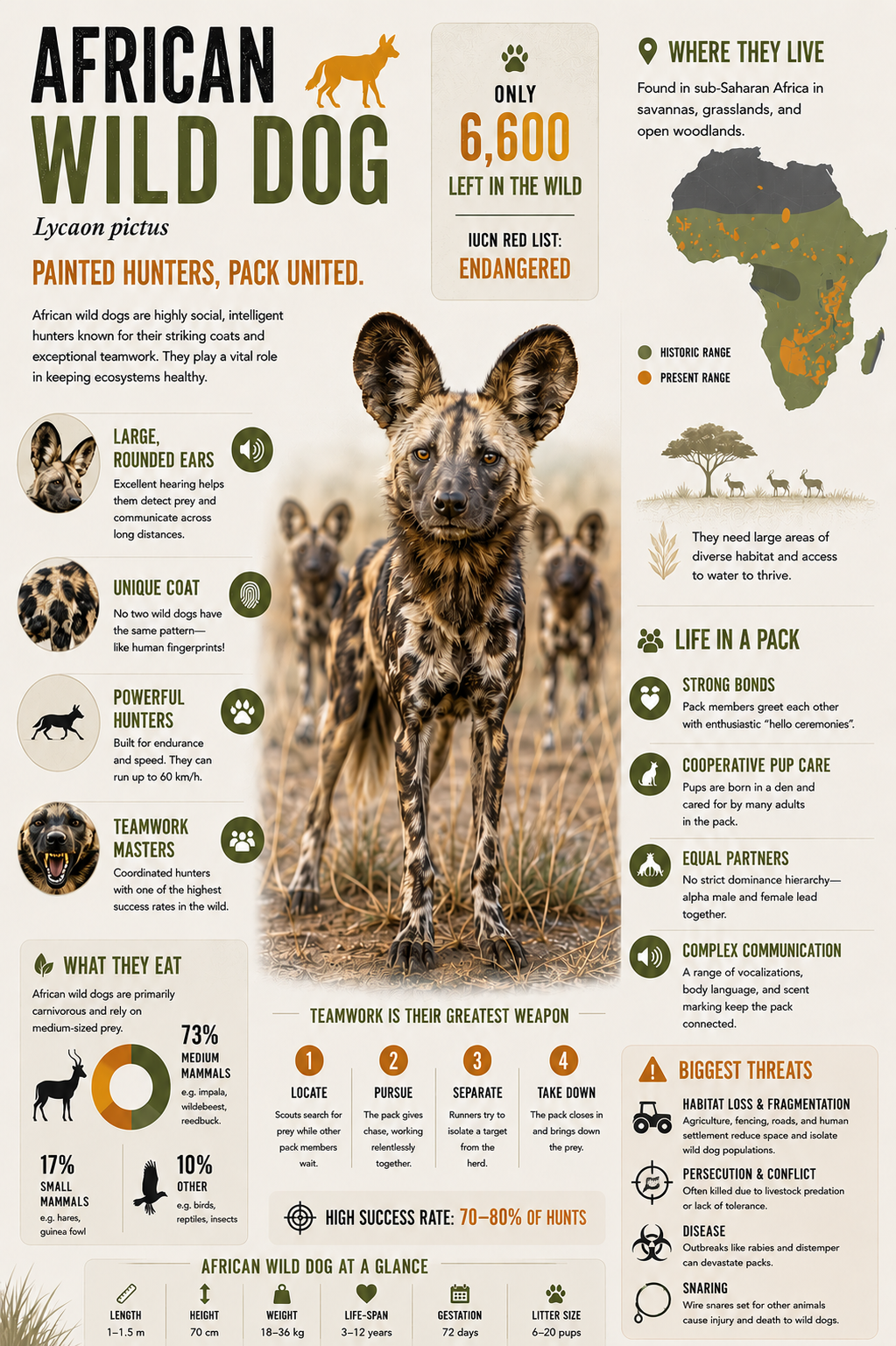
Post Published Date: June 17, 2026